
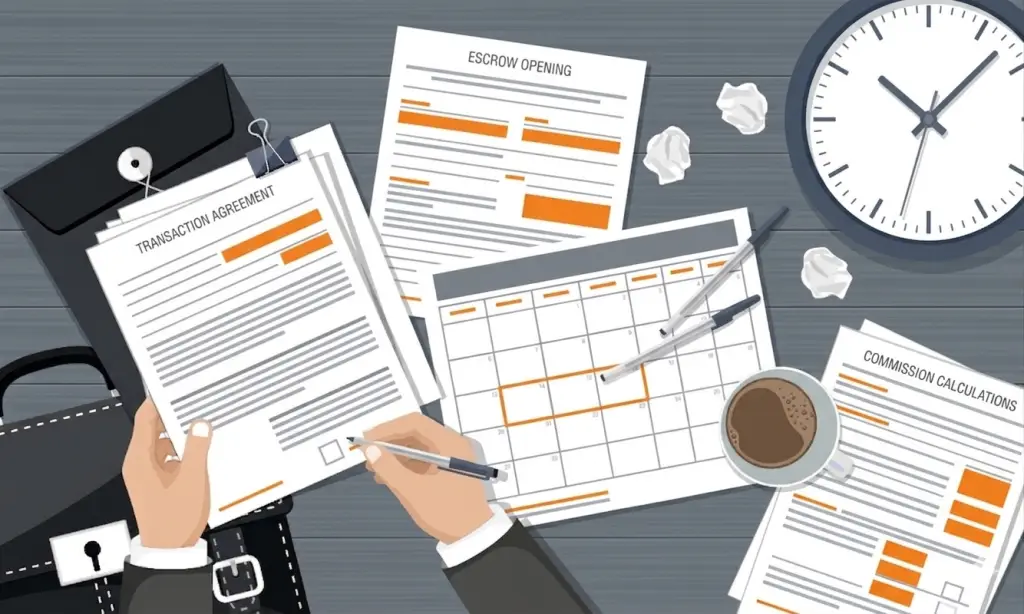
This article explains when to submit your CDA request and why timing matters just as much as documentation.
Most commission delays are not caused by mistakes.
They are caused by late submissions.
The Rule of Thumb
Submit your CDA as soon as the transaction is under contract and a closing date is scheduled.
Do not wait until the day before closing.
Do not wait for the title company to ask.
CDAs are operational documents that require review and preparation. They are not created instantly.
Why Early Submission Matters
Submitting early allows Easy Realty to:
- Review transaction documents
- Confirm commission amounts
- Coordinate with the closing company
- Resolve issues before funds move
Early submission reduces stress for:
- You
- The closing company
- The brokerage
Late submission compresses everything into the final hours of the transaction.
What “Too Late” Looks Like
CDA requests submitted:
- The day before closing
- The morning of closing
- After the closing package is finalized
…create unnecessary risk.
At that point:
- Errors are harder to fix
- Wires may already be queued
- Checks may already be cut
None of this benefits the agent.
How Far in Advance Is Ideal
While every transaction is different, the best practice is:
- Submit your CDA several days prior to closing
This gives enough time to:
- Verify documentation
- Prepare the CDA
- Deliver it to the closing company without urgency
What Happens If Something Changes
Changes happen.
If any of the following change after submission:
- Closing date
- Commission amount
- Transaction structure
- Referral details
Do not submit a new form.
Update the existing support ticket so the change can be tracked and applied cleanly.
Rentals and Non‑Traditional Closings
Rental deals often move faster and involve different payers.
Because checks are sometimes issued by:
- Property owners
- Management companies
- Other brokerages
Early communication is even more important.
If Easy Realty must receive and redistribute funds, timing depends on when funds clear the brokerage account.
A Reminder on Payment Flow
Agents may never receive commission payments directly.
All funds must be paid:
- From the title or paying party to Easy Realty, or
- From Easy Realty to the agent
Submitting early helps ensure the correct payout method is used the first time.
Common Timing Mistakes
- Waiting for the title company to request a CDA
- Submitting without a confirmed closing date
- Assuming a “rush” CDA can be done instantly
- Submitting multiple forms instead of updating the ticket
When in doubt, submit early.
The Bottom Line
Late CDAs don’t move faster.
Early CDAs move smoother.
If getting paid on time matters, timing matters.
Related Resources
- How to Request a CDA (Commission Disbursement Authorization)
- What Documents We Need to Process Your CDA
- Referral Fee Disbursement Authorization
- How Support Requests Work at Easy Realty