
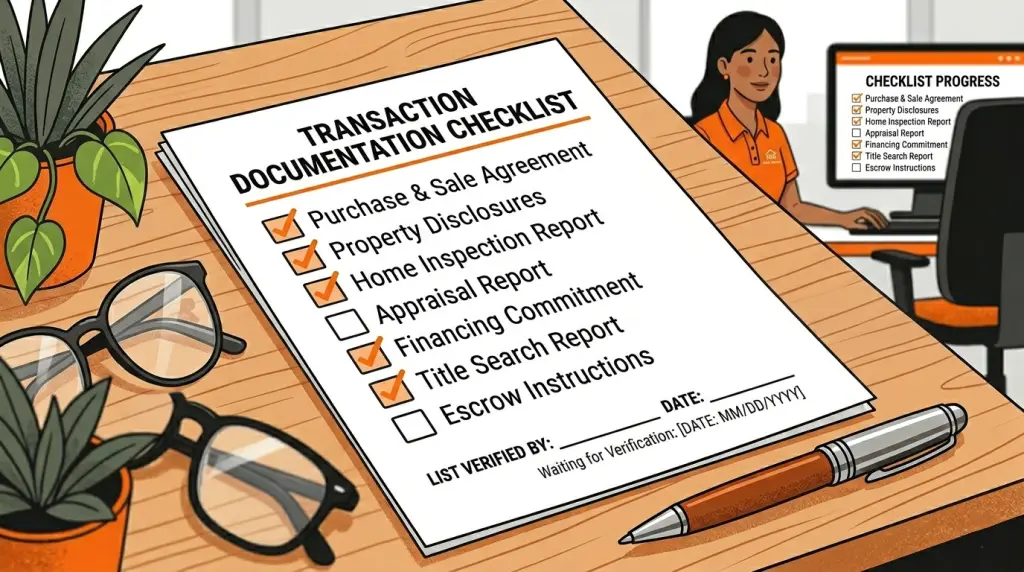
This article explains what transaction documents must be retained in your file and why complete documentation matters.
This is not optional.
This is not “extra paperwork.”
Complete transaction files protect:
- You
- The brokerage
- The transaction
Why Transaction Documentation Matters
Every real estate transaction creates a legal record.
That record must clearly show:
- Who the parties were
- What was agreed to
- How funds were handled
- How the brokerage was compensated
Incomplete files create risk long after closing.
Brokerage Agreements
Your file must include executed brokerage agreements, such as:
- Listing agreements
- Buyer brokerage agreements
- Rental or lease listing agreements
- Property management agreements
- Any written agreement engaging the broker’s services
If the brokerage relationship existed, it must be documented.
Offers and Contracts
Your file must include:
- All written offers (accepted, rejected, or withdrawn)
- Executed purchase and sale contracts
- Counteroffers
- Lease agreements for rental transactions
- All addenda, riders, and amendments
Contracts tell the story of how the deal came together.
Mandatory Agency and Brokerage Disclosures
Required disclosures must be retained, including:
- Transaction Broker Notice, when applicable
- Single Agent Notice
- No Brokerage Relationship Disclosure
- Designated Sales Associate Disclosure
- Any agency transition disclosures
Missing disclosures are one of the fastest ways to create compliance issues.
Escrow and Trust Account Documentation
Your file must show how deposits were handled, including:
- Deposit receipts
- Escrow letters or verification
- Copies of deposit checks or wire confirmations
- Escrow disbursement instructions
- Final escrow reconciliation records
Money movement must always be traceable.
Broker Communications and Records
Transaction files must include:
- Emails and written communications related to the transaction
- Internal notes supporting negotiations or decisions
- Broker review notes
- Compliance checklists, if applicable
If a decision was made, there should be a record of why.
Advertising and Marketing Materials
Your file should retain:
- Property flyers
- MLS printouts
- Online listing screenshots
- Records of price or term changes in advertising
Marketing is part of the transaction record.
Closing Documentation
Closing records must include:
- HUD‑1 or Closing Disclosure
- Commission Disbursement Authorization (CDA)
- Final settlement statements
- Proof of brokerage compensation
- Wire confirmations for outbound commissions
This is the financial conclusion of the transaction.
Transaction‑Related Financial Records
Retain financial records such as:
- Checks, money orders, and wire confirmations
- Invoices paid through the transaction, if applicable
- Documentation for refunds or returned deposits
Every dollar should be accounted for.
Compliance and Risk Management Records
If issues arose, retain:
- Escrow dispute documentation
- Interpleader filings
- Any compliance or risk‑related correspondence
These records matter most when something goes wrong.
A Simple Rule of Thumb
If the document:
- Affected the transaction
- Affected compensation
- Affected agency
- Affected funds
It belongs in the file.